
pourcityroasters.com
Retail
Coffee bags, merchandise, and public pricing.
Pour City Roasters · October 2026
A modern retail and wholesale experience for Pour City Roasters, built on one custom SvelteKit application and one Shopify commerce backend — designed to make everyday store management easier.
One application
Retail and wholesale
One commerce backend
Wholesale at launch
The direction
The current WordPress / WooCommerce customer storefront will be replaced. Retail shoppers and wholesale buyers will each have a tailored online experience, while the team manages products, online orders, payment, and shipping in Shopify. Square continues to operate the café POS independently.
Why this approach. Shopify handles commerce administration and fulfillment, so the project focuses custom development where it adds the most value: the Pour City brand experience. It avoids introducing a separate CMS, inventory synchronization service, or custom shipping dashboard.
01 / Solution architecture
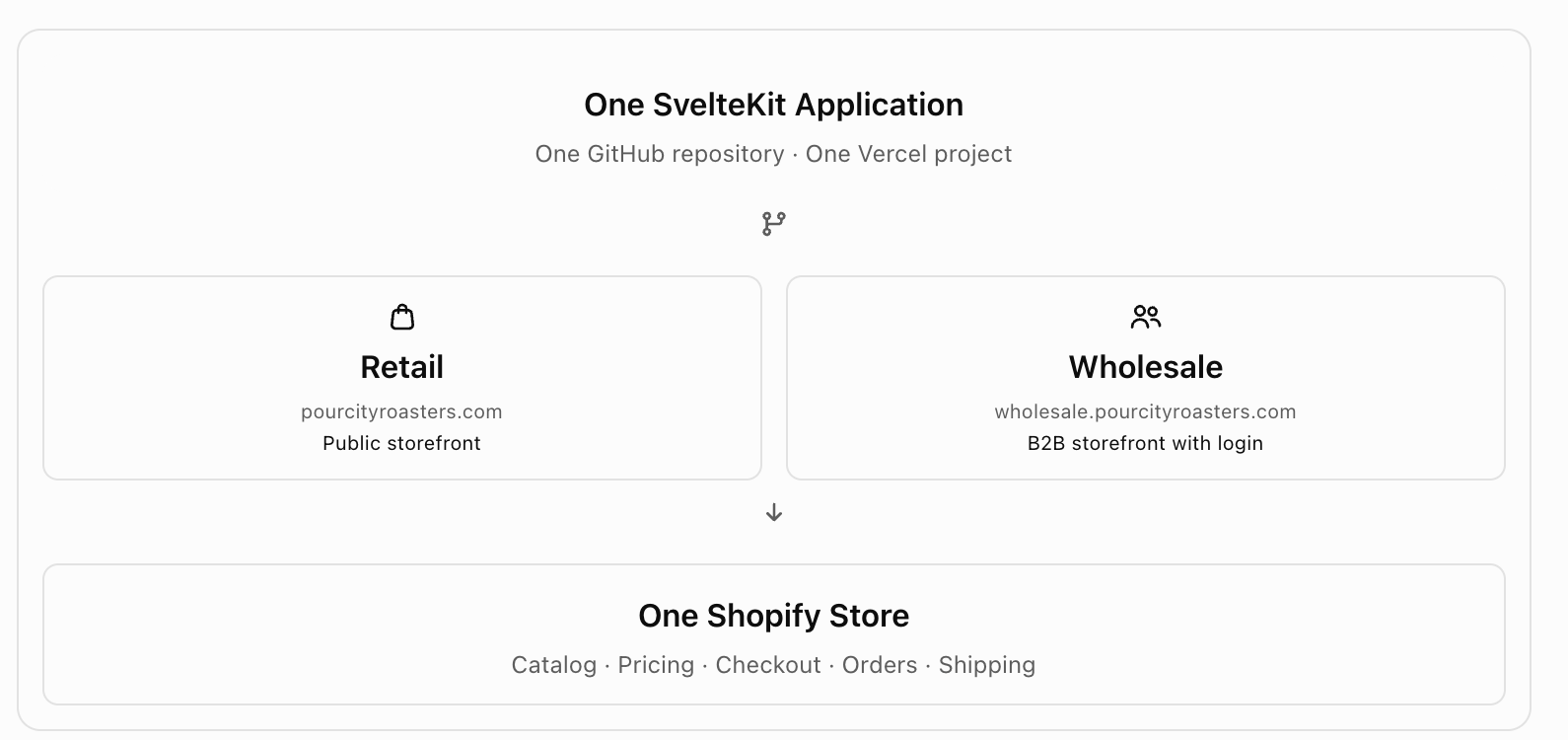
Both domains resolve to one Vercel-hosted SvelteKit deployment. Domain-aware routing provides separate retail and wholesale experiences, while shared storefront components and Shopify integration are maintained once.
Application
One GitHub repository · One Vercel project · Shared UI and commerce integration
pourcityroasters.com
Coffee bags, merchandise, and public pricing.
wholesale.pourcityroasters.com
Approved buyers. Bulk coffee by weight.
Shopify Storefront API + Customer Account API
Catalogs · authenticated B2B context · cart · discounts · homepage merchandising
Operations
Shared operational dashboard for all online commerce
Security and checkout. Wholesale login and pricing are enforced using Shopify’s authenticated B2B context — not simply by placing wholesale pages on a subdomain. Shopify-hosted checkout handles web payments. The Shopify admin interface itself is not custom-developed or redesigned.
02 / Included scope
The implementation is intentionally focused, using the existing approved design direction and Shopify’s native capabilities rather than developing a custom commerce backend.
Experience
One application with distinct, responsive retail and wholesale experiences.
Commerce
One Shopify store configured for online retail and wholesale operations.
Merchandising
The team controls featured products and campaign banners from Shopify.
Fulfillment
Native Shopify shipping workflows. No separate fulfillment software for the agreed shipping model.
Transition
Transfer agreed content and products from WooCommerce, configure key redirects, complete representative retail and wholesale checkout tests, verify mobile usability and domains, and provide a short Shopify administration guide plus one remote training session.
03 / Day-to-day ownership
Shopify is the sole content and commerce administration platform for this scope. No Strapi or separate CMS is included.
In Shopify
Content and operations the team can update independently.
In code
Changes to the storefront’s underlying design and structure.
About Shopify admin. Shopify’s back-office interface is configurable for settings, records, Metaobjects, and catalog data, but its native interface is not being redesigned as part of this project. Shopify’s theme editor will not edit SvelteKit page layouts.
04 / Shipping and fulfillment
The customer selects a shipping service at Shopify checkout. Staff work from Shopify’s standard orders and fulfillment interface to purchase labels, print them, and share tracking updates.
Configure origin, destinations, product weights, and retail versus wholesale shipping profiles.
Apply agreed Shopify-native flat, weight-based, or supported carrier rates.
Buy and print supported shipping labels directly from Shopify’s order admin.
Mark orders fulfilled, associate tracking numbers, and send Shopify notifications.
Shipping boundaries. Carrier eligibility and specific services depend on merchant location and Shopify plan. Client-owned carrier-account rate integrations, custom freight quotations, complex multi-warehouse rules, and postage are outside this fixed fee.
05 / Investment
The scope reuses the established design direction and consolidates operations around Shopify, keeping the project within a small-business investment range.
Ongoing platform and support costs are listed in expected monthly fees. Postage and other third-party services remain separate.
06 / Expected monthly fees
The one-time build is separate from the recurring stack. Figures below use current published list pricing and may change with plan choice, billing cycle, and sales volume.
How billing works. Splantern maintenance ($200/mo) is paid to Splantern through a Stripe subscription. Shopify and Thrive fees are paid directly to those companies on their own accounts—not through Splantern.
Included in $200
Ongoing care for the custom storefront after launch, billed to Splantern via Stripe. See maintenance terms.
Billed by others
Paid directly to Shopify and Thrive on their platforms. Not included in the Splantern Stripe subscription.
Optional by design. The fixed-price build does not require Thrive. Square can stay the café POS on its own. Add Thrive only if you want inventory kept in sync across Square and Shopify. Domain renewals, postage, and payment processing stay usage-based.
Maintenance terms. The $200/mo fee includes up to 2 hours of content updates per calendar month, bug fixes at no extra charge, and security patches and incident response for the launched storefront. Unused content hours do not roll over. Work beyond the monthly allotment, new features, redesigns, and third-party platform fees are billed separately or quoted as additional scope.
Shopify pricing from shopify.com/pricing (US, Oct 2026). Thrive Starter from the Shopify App Store listing for Thrive Inventory. Confirm live rates before signing.
07 / Assumptions
Launch acceptance. Successful retail and authorized wholesale test purchases, correct catalog and discount pricing, appropriate shipping checkout rates and test label generation, Shopify-managed homepage updates, functional domain routing and essential redirects, and responsive display on common devices.
08 / Reference diagrams
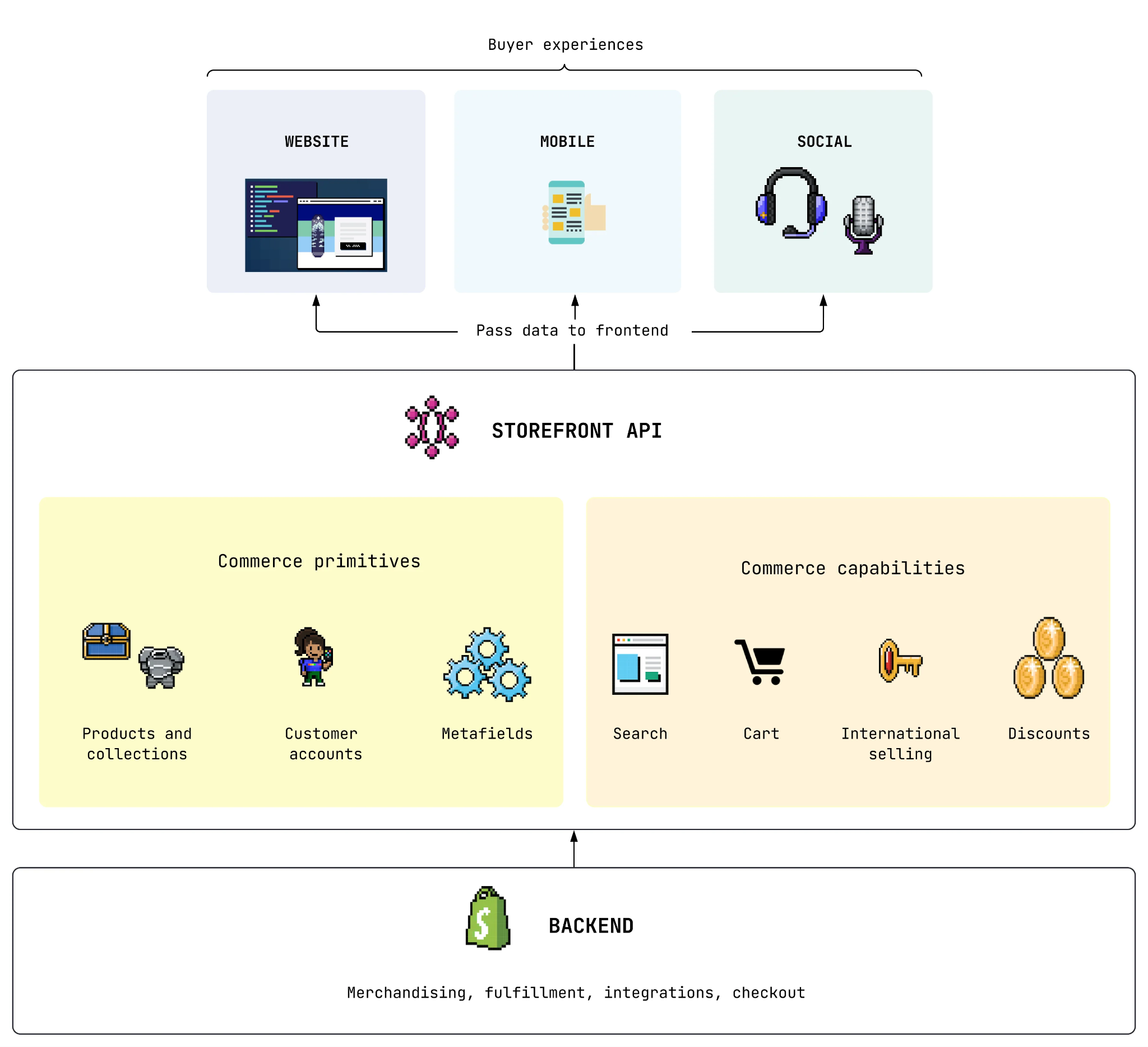
These reference visuals were supplied during architecture review. The diagram above is the recommended implementation for Pour City Roasters.
Draft for discussion
Confirm the details below and send them back. Those inputs finalize the implementation agreement.
Share feedback with your Splantern contact. This page is a discussion draft. A signed agreement and deposit schedule follow once the scope is confirmed.